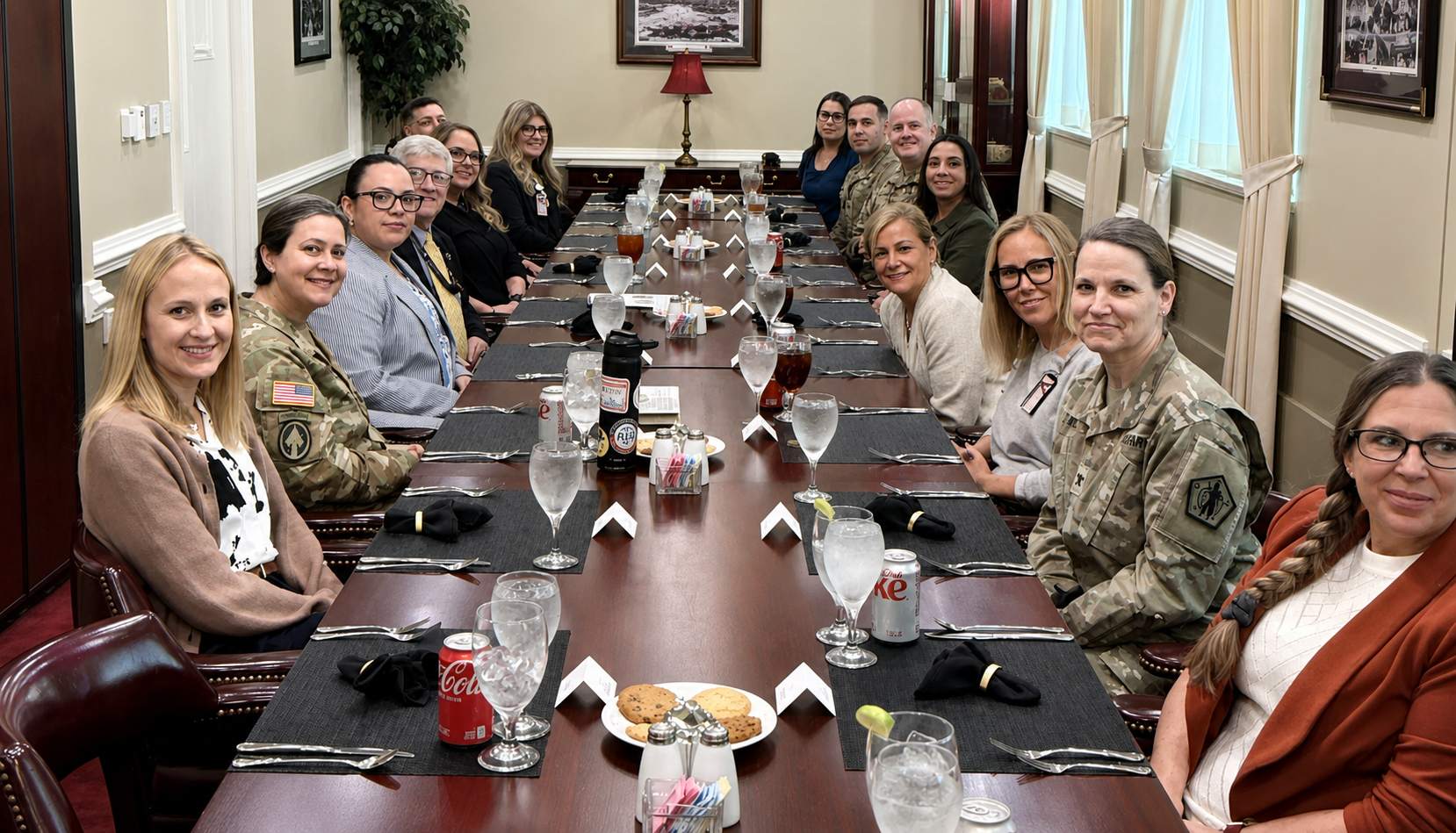
Photo: SAWG members meeting with Army senior leaders at the Pentagon to advocate for Soldiers, survivors, and families.
Three years after losing my husband, I found myself sitting at the Pentagon advocating for a change to the Army’s bereavement leave policy.
And honestly, it felt like I was exactly where I was supposed to be.
The Policy I Never Expected to Need
There is one part of this story that I still have a hard time believing.
Keith died on May 8, 2023.
What I didn’t know then was that on that very same day, the Secretary of the Army signed the Army’s bereavement leave policy for Soldiers who lose a spouse or child.
The same policy I would soon find myself questioning. The same policy that would eventually lead me to apply for the Survivor Advisory Working Group.
And three years later, during the week of May 4–8, I would be sitting at the Pentagon personally advocating to change it.
What are the chances?
I don’t know that I can explain it, but when I look at how all of these pieces came together, it feels like more than coincidence to me. It feels like I was meant to be there, like somehow, even in losing Keith, a path was being created that I couldn’t see yet.
When Keith died, it was the first time I really learned what the Army’s bereavement policy looked like for a Soldier who loses a spouse or child.
My first thought was:
They want me to use my own leave?
I had three sons who had just lost their father. I was suddenly a single parent. Everything Keith and I shared—our children, our home, family responsibilities, and even parts of our careers, now fell on me.
I also couldn’t understand why a Soldier with fewer than 30 days of leave could receive non-chargeable bereavement leave, while another Soldier experiencing the same loss could be required to use their own leave first.
That didn’t feel fair to me.
Loss is loss.
I remember wondering, How do I get this in front of someone who can actually change it?
A Chance to Have a Voice
Then someone at work told me that a tasker had come through asking if our command had any Army survivors interested in applying for the Survivor Advisory Working Group, or SAWG.
I thought, Wow. This just fell in my lap.
This was my opportunity.
I applied along with many others and was selected to serve as a surviving spouse and the only active-duty service member among the survivor members of the group.
For me, that meant having the opportunity to be a voice for both sides, the surviving family and the Soldier.
Before Keith died, I was what we call a high-speed Soldier. I was always willing to do more than what was required to make sure the mission happened. I sacrificed time with my family when needed, and I tried to be the voice for Soldiers who didn’t always have the rank or platform to speak and be heard.
Then loss changed me.
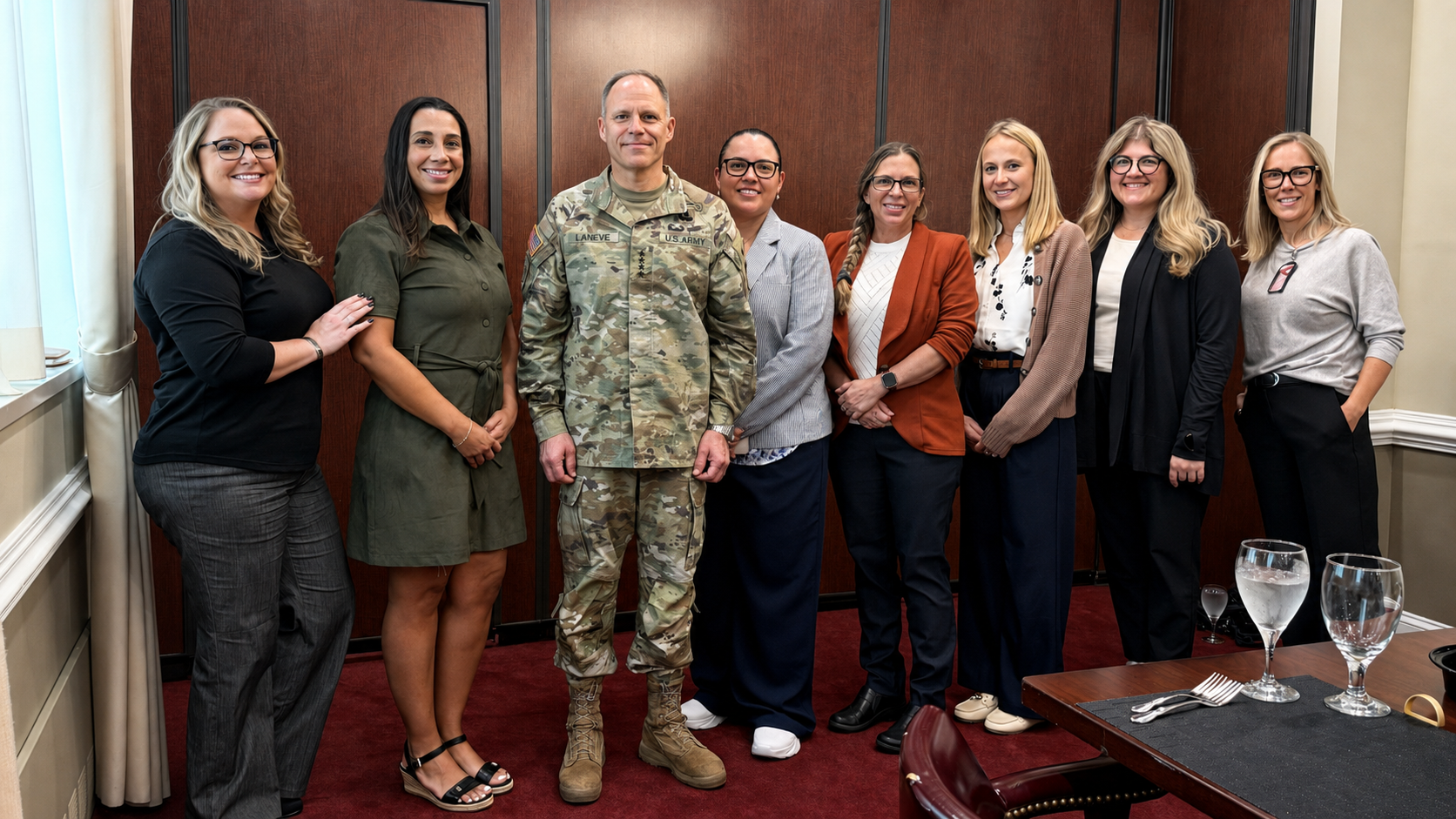
Photo: Members of the Army Survivor Advisory Working Group during our Pentagon visit, representing the voices and experiences of Army survivors and their families.
Grief Does Not Follow a Calendar
After I buried Keith, I went straight into a two-month Army school.
I know that may sound strange, but it was exactly what I needed at the time.
The weeks after Keith died felt like I was living in a movie. I wasn’t ready for any of it to feel real yet. Going to school gave me a chance to step outside of myself.
My family stepped in to help with my children, and for a couple of months I didn’t have to be needed by everyone else. I could focus on myself.
I was surrounded by battle buddies who knew both Keith and me. They supported me while I tried to feel normal for a little while, while also giving my heart space to grieve and begin accepting what had happened.
For about six months, I wore a mask.
I kept moving. I kept working. I kept showing up.
From the outside, I probably looked like I was doing okay. But eventually, the reality of what had happened caught up with me.
This really happened to me.
Keith was really gone.
My three sons and I were on our own.
Later, close to the first anniversary, I remember calling an Army battle buddy and breaking down.
He asked me, “Do you know what month this is?”
I hadn’t even made the connection.
My body knew before my mind did.
That experience is a huge reason I believe the current policy needs to change.
Grief does not happen on the Army’s timeline.
A Soldier may need time immediately. They may need to keep moving at first. They may need time months later when the shock finally wears off. They may need it around that first anniversary.
The time when a Soldier appears to be functioning is not necessarily the time when they need support most.
What I’m Asking the Army to Change
That is why I proposed 90 days of non-chargeable bereavement leave that could be used as needed within 15 months after the loss of a spouse or child.
The point isn’t to tell a Soldier when or how to grieve.
It is to give them the time and flexibility to take care of themselves and their family when they actually need it.
The loss of a spouse changes the entire way a family functions. A Soldier may suddenly become the primary caregiver. They may need a new family care plan. They may have to handle school, appointments, finances, household responsibilities, legal matters, travel, grieving children, and their own grief.
And we are still asking them to be Soldiers.
Military service is not a typical 9 to 5 job. We work in high-OPTEMPO environments. We lead people. People depend on us.
How can we realistically expect a Soldier who has just lost a spouse or child to simply be mission ready again in a few weeks?
During one of our discussions, I said something I believe deeply:
“We pride ourselves on people first, but the bereavement policy seems to support mission first.”
I was fortunate. My command supported me tremendously, and I will always be grateful for that.
But I also know that if I had been serving in a different type of unit, somewhere with a higher operational tempo, like a brigade combat team, my experience could have been completely different.
To be honest, without the support of my unit, I likely would have chosen to separate from the Army after 15 years of service. At that point, I would have sacrificed the career I had spent years building in order to protect my mental health and take care of my family.
And that is part of why this matters so much to me.
A Soldier should not have to lose everything they have worked toward simply because an unexpected and tragic loss changed what they were capable of carrying for a period of time.
Support during a time this important should not depend on what command you happen to be in or how understanding your commander happens to be.
A Soldier should never have to beg, explain, or prove why they need time to grieve or take care of their family. They should not have to choose between their family and their career during one of the most devastating times of their life.
That support should already be built into policy.
A Seat at the Table
When the issues brought forward through SAWG were reviewed across the Army, this proposal was ranked the number-one issue by 11 of 14 Army major commands.
The question I had asked myself three years earlier,
How do I get this in front of someone who can actually change it?
eventually brought me all the way to the Pentagon.
On May 6, I personally presented my issue to Gen. Christopher C. LaNeve, Vice Chief of Staff of the Army, along with Ms. Dee A. Giese, Director of the Prevention, Resilience and Readiness Directorate (DPRR), and SGM Edgar Monsanto, DPRR’s Senior Enlisted Advisor.
I also had the opportunity to discuss the proposal with Mr. Roy Wallace, Assistant Deputy Chief of Staff, G-1, and SGM Eva Commons, Senior Enlisted Advisor to the Deputy Chief of Staff, G-1 and COL Laura P. Wood, Chief, Casualty and Mortuary Affairs Operations Division.
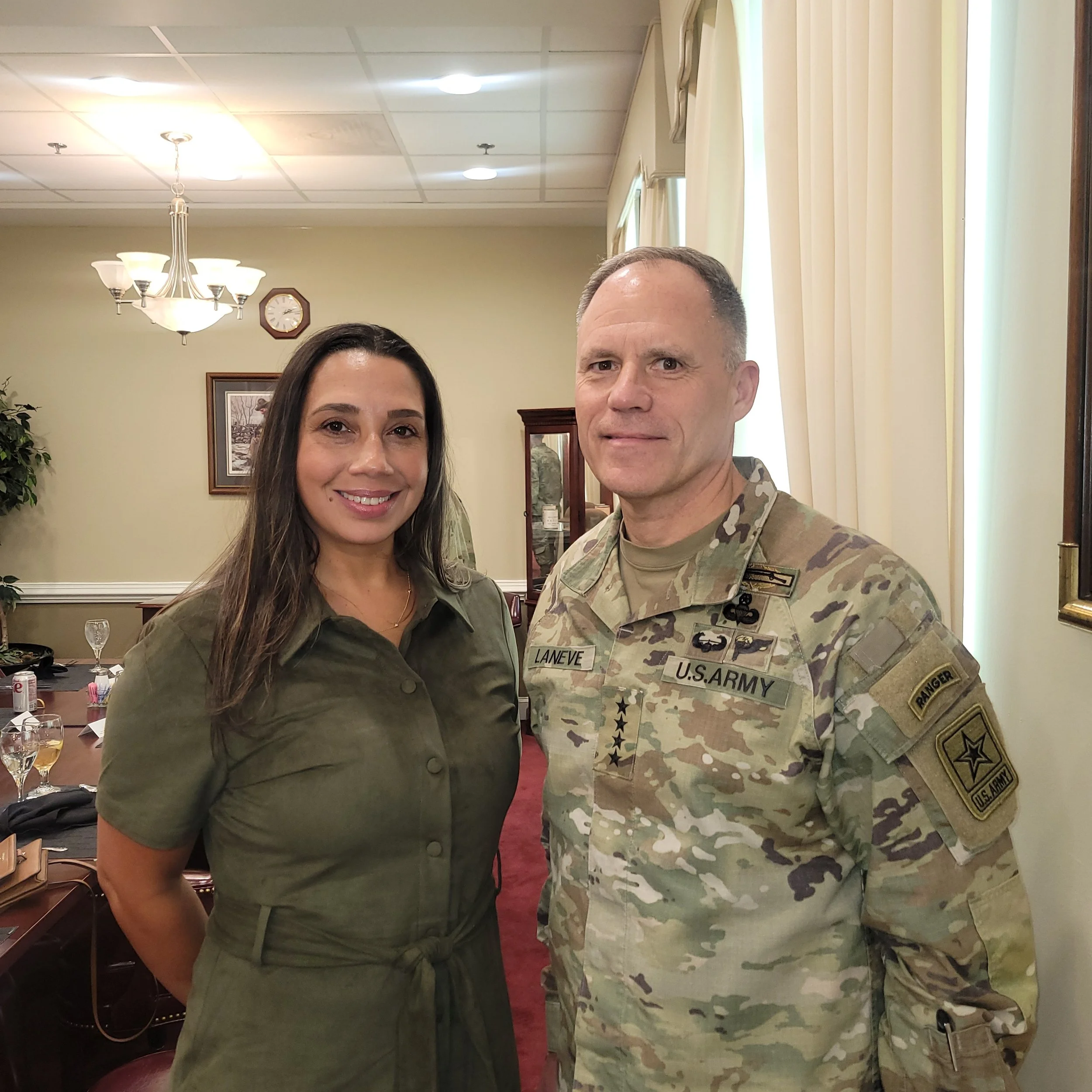
Photo: With Gen. Christopher C. LaNeve, Vice Chief of Staff of the Army, after sharing my bereavement leave proposal and the lived experience behind it.
Having the opportunity to share my experience and the reasoning behind the proposal directly with senior Army leaders made that moment even more meaningful.
These were people in positions to understand the issue, ask questions, and help determine what meaningful change to the policy could look like.
Gen. LaNeve listened to my story and the reasoning behind the proposal. He understood my concerns and was very interested in seeing how the policy could be changed
Sitting there, I kept thinking about how this journey began.
I had learned about this policy because my husband died.
It had been signed by the Secretary of the Army on the very day Keith died.
And now, almost exactly three years later, I was sitting across from one of the Army’s most senior leaders asking the Army to make it better for the Soldier and family who comes next.
Then there was one more connection I wasn’t expecting.
Gen. LaNeve is from Pittsburgh, the same city where my unit is located and where Keith was when he died.
Maybe some people would call all of that coincidence.
I don’t.
For me, it felt like Keith was shining his light on me.
Like I was exactly where I was supposed to be.
The Pentagon was not the only opportunity I had to use my voice.
Beyond the Army
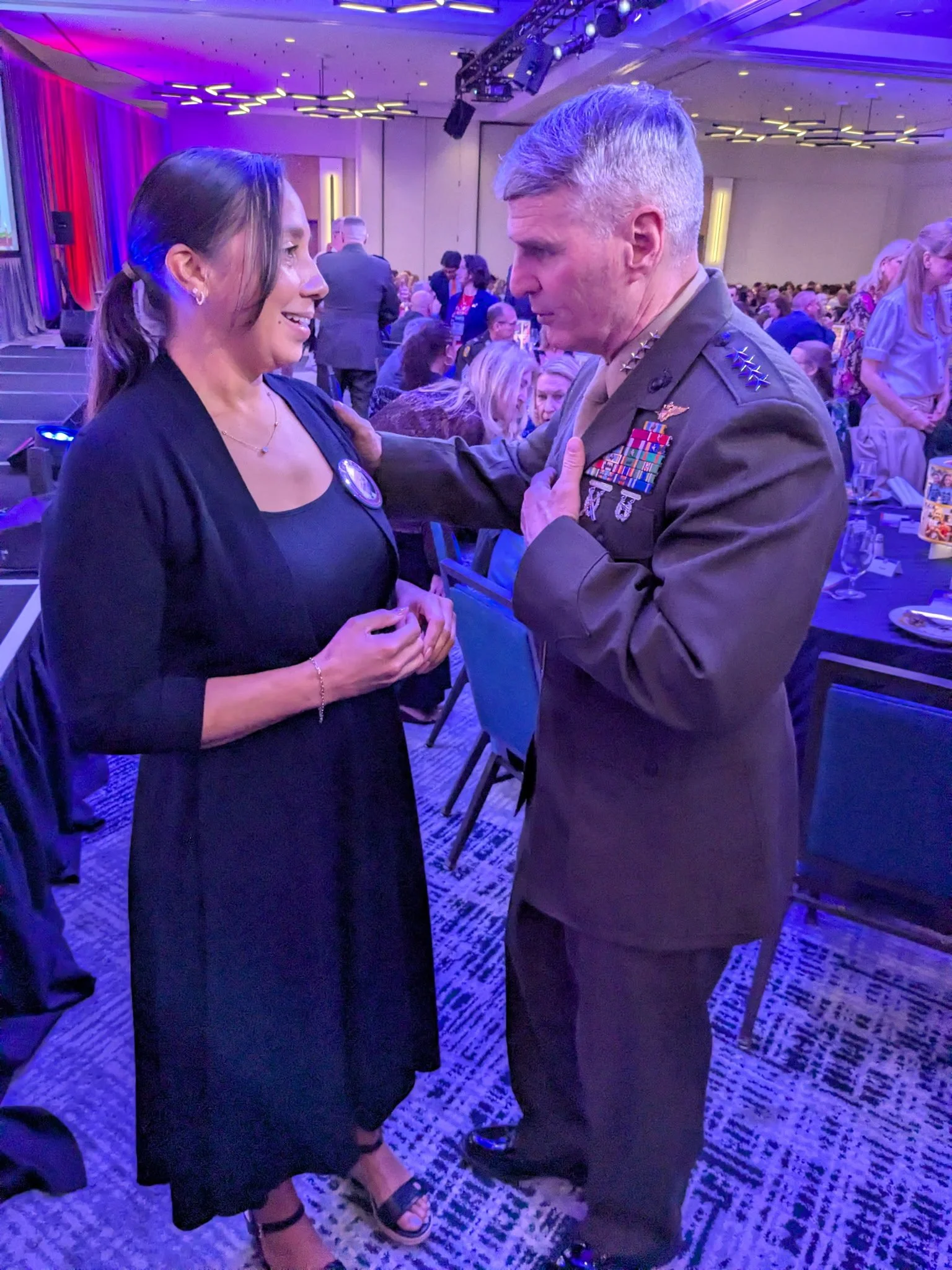
At a separate Memorial Day event with Tragedy Assistance Program for Survivors (TAPS), I had the opportunity to meet Gen. Christopher J. Mahoney, Vice Chairman of the Joint Chiefs of Staff and the nation’s second-highest-ranking military officer.
I wasn’t there for a scheduled policy meeting. I was there as a survivor. But when I saw an opportunity to speak with him, I walked over and shared what I was advocating for, the need to give service members who lose a spouse or child more time and flexibility to care for themselves and their families after loss.
For me, it was another reminder that advocacy does not always happen because someone invites you into the room. Sometimes an opportunity presents itself, and you have to be willing to walk across the room and use your voice.
My proposal began with the Army because that is where my experience began. But loss is not unique to one branch of service.
My hope is that conversations like these can also bring greater awareness to how we support grieving service members and their families across the joint force.
Photo: Speaking with Gen. Christopher J. Mahoney, Vice Chairman of the Joint Chiefs of Staff, at a TAPS Memorial Day event about the need for more flexible bereavement support for service members and their families.
Speaking From Both Sides
I left those conversations feeling empowered because I wasn’t only speaking for myself.
As both a surviving spouse and an active-duty Soldier, I understood what it meant to be on both sides of this experience.
I knew what it meant to lose my husband, my best friend, my battle buddy, and the father of my children.
But I also knew what it meant to put the uniform back on and still be expected to perform.
I was speaking for the Soldier who may lose a spouse tomorrow.
For the Soldier who suddenly becomes a single parent.
For the children who need their surviving parent.
For the Soldier who looks fine on the outside but is barely holding it together inside.
And for the family that deserves time to figure out what their new life looks like without having to choose between family and career.
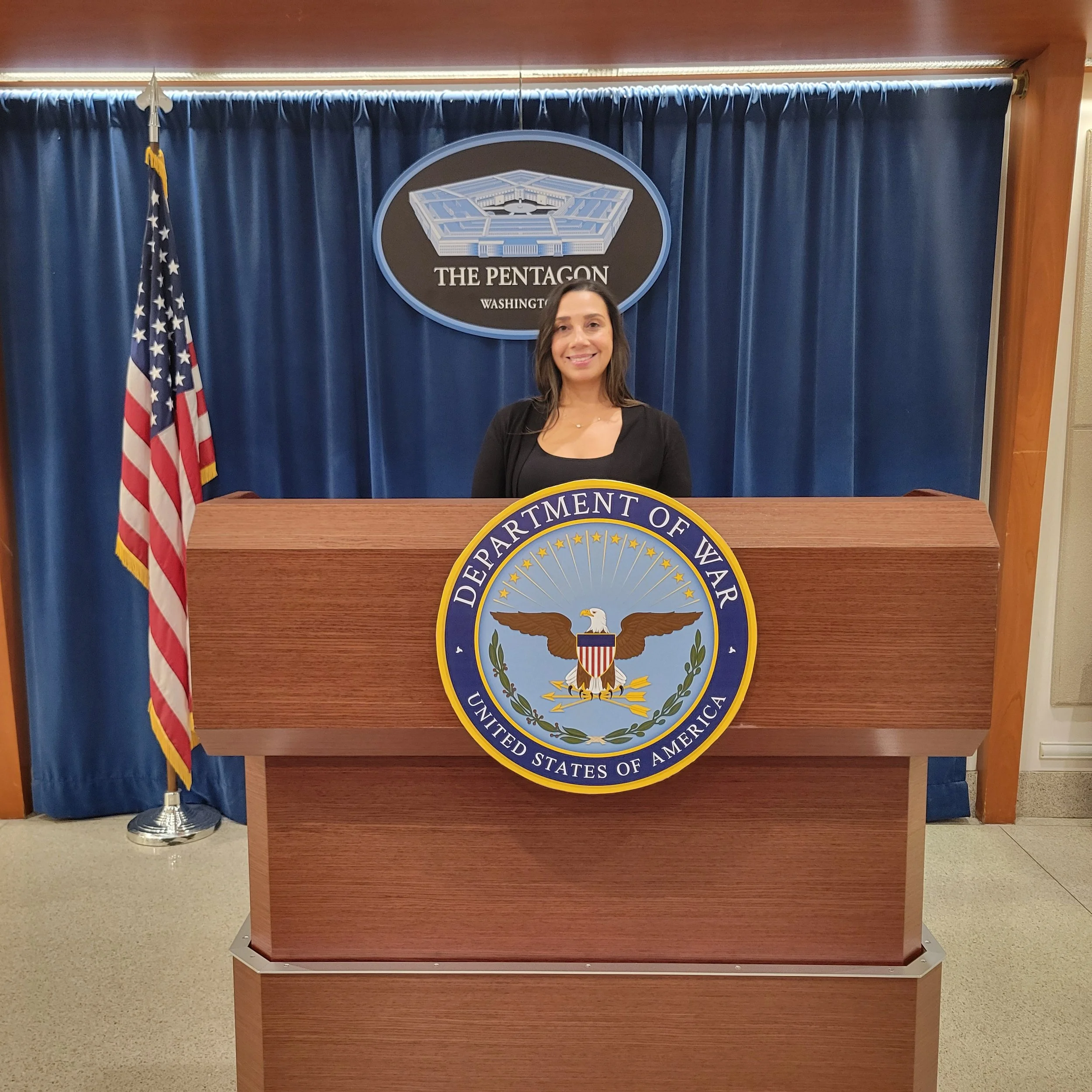
Photo: At the Pentagon during our May 2026 SAWG visit, an opportunity to use my voice to advocate for the Soldiers and families who come next.
What Legacy Can Look Like
This experience has also helped me understand another part of what Shining Light Legacy means to me.
I want to help surviving spouses and families find themselves again after loss. I want people to know that life can still hold meaning, purpose, happiness, and possibility.
But I also want to use what I have learned through loss to change things for the people who come after us.
I can’t change what happened to Keith.
I can’t give my sons their father back.
But I can use my voice.
And whenever I am fortunate enough to have a seat at the table, I plan to use it.
If this policy changes someday, there may be a Soldier I will never meet who is given the time they need to care for themselves and their family without having to beg for it.
There may be children who get to have their surviving parent home when they need them most.
There may be a Soldier who is given the space to step away, care for themselves, rebuild their family structure, and eventually return to the mission stronger because the Army gave them the time to do it.
They may never know my name.
They may never know Keith’s story.
And that’s okay.
Because that is what legacy can be.
Sometimes shining a light means helping someone find their way forward.
And sometimes it means shining that light on something that needs to change.
For me, both matter.
And I believe Keith would be proud that something born from one of the hardest moments of our family’s life may someday make the road a little easier for another Soldier and another family.
If you would like to follow along as this vision grows, you can connect with us on Instagram and Facebook:
@shininglightlegacy or facebook.com/shininglightlegacy
Together we can remind one another that even after loss, life still holds meaning, purpose, and the opportunity to create something beautiful.
